If you cross an 80 lb male German Shepherd with a 40 lb female Beagle, how big will the puppies be?
Will they be exactly 60 pounds? Will they be massive like their father, or compact like their mother?
The question of whether puppy size depends on the parents is one of the most misunderstood topics in breeding. The answer is yes, absolutely—but the genetic mechanics behind how those parental traits are inherited are highly complex. Here is what every dog owner needs to know.
💡 Key Takeaway (Bottom Line)
A puppy’s size is a polygenic trait dictated by both parents. Environmental factors like “maternal uterine constraint” limit how large a puppy can be at birth, but paternal genetics heavily influence ultimate adult height and bone density. Predicting F1 crossbreed size is mathematically unstable due to epistatic gene masking.
The Polygenic Chaos of Canine Size
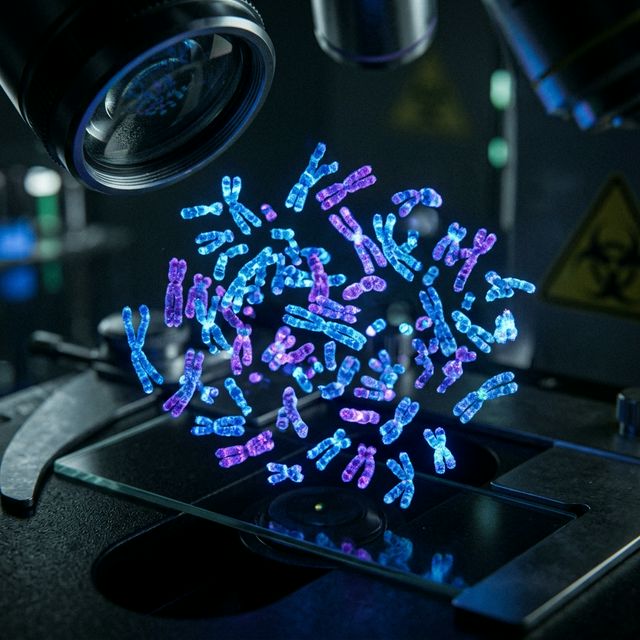
Growth and physical size are not controlled by a single “on/off” switch in a dog’s genetic code. Size is a polygenic trait. This means it is dictated by dozens of different genes interacting with one another.
When a puppy is conceived, they receive 50% of their DNA from the mother (the Dam) and 50% from the father (the Sire). However, they don’t just receive the genetic instructions for the parent’s current size; they receive all of the recessive genes those parents are carrying from previous generations.
Furthermore, these genes are subject to epistasis—a biological phenomenon where one inherited gene completely masks or alters the expression of another. This is why, in an F1 mixed-breed litter of 8 puppies, you might have one “runt” that maxes out at 30 lbs, and one “giant” sibling that clears 65 lbs. They inherited entirely different epistatic combinations.
Does the Mother or Father Influence Size More?
Genetically speaking, the mother and father contribute equally to the DNA blueprint. However, biologically, the mother has a significantly larger influence on birth weight, while the father heavily influences final adult height.
Maternal Uterine Constraint
If a small female dog becomes pregnant by a large male dog, her uterus physically cannot support the growth of massive puppies. Through a biological mechanism called “maternal constraint,” the mother’s body chemically restricts the growth of the fetuses so they can be safely delivered. Therefore, a puppy’s birth weight is almost entirely dependent on the mother.
Post-Natal Compensatory Growth
Once the puppies are born and begin nursing, the maternal physical constraint is lifted. If those puppies inherited the “large” growth genes from their father, they will undergo what veterinarians call “post-natal compensatory growth” (rapid catch-up growth). They will exponentially outgrow their mother.
The IGF1 and GHR Genes: The Orthopedic Switches
In recent years, geneticists have mapped the exact genomic markers that control canine orthopedic growth.
The primary switch is the IGF1 (Insulin-like Growth Factor 1) gene. All small and toy breeds (like Chihuahuas and Toy Poodles) carry a mutated variant of this gene that explicitly instructs their epiphyseal growth plates to calcify and fuse early.
- If a puppy inherits two copies of the “small”
IGF1variant (one from each parent), they will be severely size-constrained.
Commercial DNA panels also test for the IGFR1 (the receptor) and the GHR (Growth Hormone Receptor) genes. The exact inherited combination of these three genes essentially dictates 85% of a dog’s total orthopedic mass.
How to Mathematically Bypass Genetic Guesswork
If you own a mixed breed or a rescue with unknown parentage, trying to guess their adult size based on genetic polygenic inheritance is impossible without a clinical DNA swab.
The only mathematically proven way to know exactly how large your puppy will get is to track their physical growth outside the womb. By weighing your puppy exactly at the crucial 14-to-16-week mark, you capture them right at the biological inflection point of their S-curve.
Stop guessing based on Mendelian genetics, and start predicting based on clinical biology! Use our Veterinary Puppy Size Calculator to plot your dog’s exact growth trajectory today.