You bought a purebred Labrador Retriever. The breeder said he would be 65 pounds. He is currently 8 months old and already tipping the scales at 80 pounds, and he is showing no signs of stopping.
Or perhaps you have a standard Goldendoodle who hit 35 pounds and suddenly stopped growing entirely, leaving you with a dog half the size you expected.
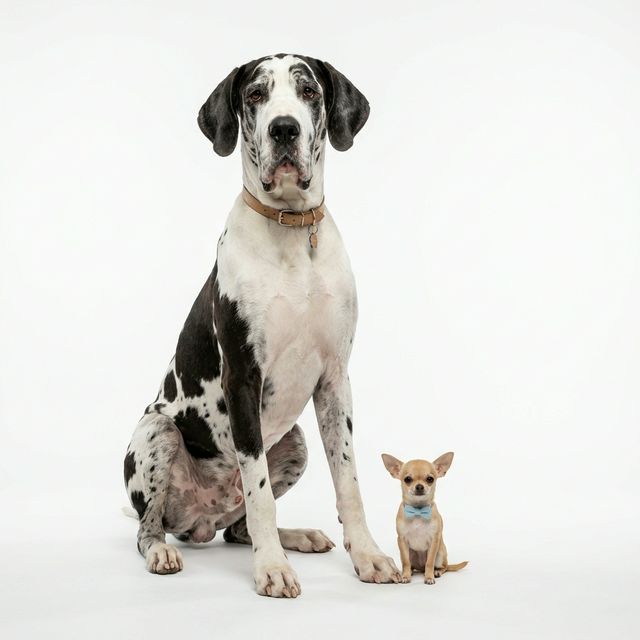
When a puppy’s growth wildly deviates from the calculator predictions or breed standards, it can cause immense anxiety for owners. Why is my puppy smaller or bigger than expected? Here are the five primary veterinary reasons for extreme size variations.
💡 Key Takeaway (Bottom Line)
The 5 primary reasons a puppy deviates from their expected weight are: Intrauterine growth restriction (Catch-Up Growth), early pediatric spaying/neutering (which makes dogs taller), severe intestinal parasite burdens, unstable Mendelian genetics in F1 hybrid Doodles, or simply being overweight.
1. The “Catch-Up” Growth Phase (IUGR)
If your puppy was the “runt” of the litter, they were born significantly smaller than their siblings due to Intrauterine Growth Restriction (IUGR)—usually caused by poor placental placement in the mother’s womb.
Many owners assume runts will always be small. This is biologically false. Runts undergo what veterinarians call “Catch-Up Growth.” Once they are born and have access to high-quality postnatal nutrition without competing against siblings inside the uterine horn, their metabolism kicks into overdrive. A runt will frequently catch up to—or even surpass—the size of the largest puppy in the litter by 6 months of age.
2. Early Pediatric Spay/Neuter Procedures
This is the most common reason large breed dogs grow excessively tall and leggy.
The hormones produced by a puppy’s reproductive organs (estrogen and testosterone) are explicitly responsible for signaling the skeletal epiphyseal (growth) plates to calcify and fuse. If you perform a pediatric gonadectomy (spaying or neutering a puppy at 8, 12, or 16 weeks of age), you remove those hormones before they can send the “stop growing” signal.
As a result, the long bones in their legs continue pushing upward for months longer than they naturally would. Dogs altered very early in life are frequently mathematically unpredictable and significantly taller than dogs altered after reaching sexual maturity.
3. Heavy Intestinal Parasite Burdens
If your puppy is drastically smaller than expected, the first thing your veterinarian will investigate is their stool using a Fecal Centrifugation Float.
Intestinal parasites (like roundworms, hookworms, and giardia) are incredibly common in young puppies. A severe worm infestation literally siphons the calories, proteins, and nutrients directly out of your puppy’s digestive tract before they can ever cross the intestinal mucosal barrier. A puppy heavily burdened with parasites will have stunted growth, a dull coat, a potbelly, and will fail to thrive. Once the parasites are cleared with a targeted dewormer, they typically experience a massive, rapid growth spurt.
4. Unstable Crossbreeding and “Hybrid Vigor”
If you have a designer dog (like a Bernedoodle or a Cockapoo), the size variation within a single litter can be astronomical due to unstable Mendelian genetics and “hybrid vigor.”
Because you are blending two completely different genetic pools, some puppies in an F1 (first generation) litter will inherit the massive structural genes of the 90-pound Bernese Mountain Dog, while siblings in the exact same litter will inherit the compact skeletal genes of the 40-pound Poodle. If your designer dog is larger or smaller than expected, it is almost entirely due to the wildly unpredictable nature of crossbreeding large and small dogs.
5. Misdiagnosing Fat as Underlying Skeletal Growth
Finally, a harsh clinical truth: your puppy might not be structurally huge. They might just be fat.
Veterinarians measure a dog’s true size using the WSAVA Body Condition Score (BCS). Puppies should be kept lean during their rapid-growth phase to protect their fragile, developing cartilage. You should be able to easily feel their ribs without applying deep pressure, and they should have a visible, tucked waistline when viewed from above. If your puppy is weighing 15 pounds heavier than the calculator predicted, consult your vet to ensure that weight is dense muscle and bone, not excess adipose tissue.
Curious where they should be based on biology? Plot their timeline on our Veterinary Puppy Size Predictor to see their exact projected healthy weight!